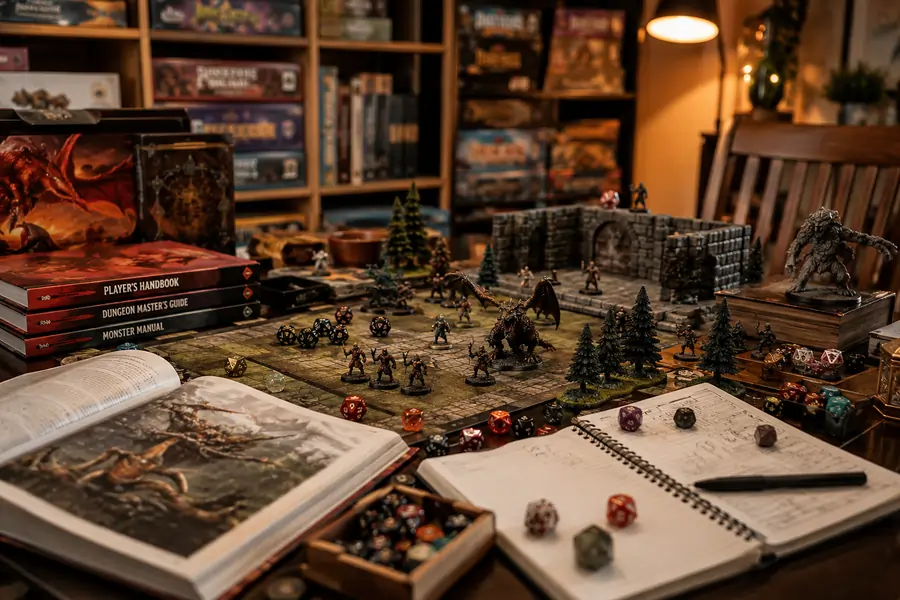
Every hobbyist eventually reaches the same point: the shelves are full of paint sets, model kits, or craft supplies, and it feels like something is missing from game night. Tabletop games for hobbyists fill exactly that gap, giving you a way to slow down, sit at a table, and enjoy a different kind of making, one built from strategy, cards, and dice instead of glue and brushes.
This guide covers the games worth adding to your collection, how to build a set-up that grows with you, and a few digital options for evenings when the table stays folded away.
Why Tabletop Games Belong in Every Hobby Collection
Hobbies and tabletop games share the same appeal. Both reward patience, both improve with practice, and both give you something satisfying to show for your time. If you already enjoy building model kits or working on a craft project, a good strategy game scratches a very similar itch, just with other people sitting across the table instead of a workbench in front of you.
Games also solve a problem that solo hobbies cannot. Painting miniatures or knitting a scarf is often a quiet, individual pursuit, which is part of the appeal, but it can be a solitary one too. Tabletop games bring the same sense of focus and progress into a social setting, which makes them a natural next step for any dedicated hobbyist looking to mix things up.
Strategy Games Worth Adding to Your Shelf
Strategy games are where most serious hobbyists end up spending the bulk of their collection budget, and for good reason. Settlers of Catan remains one of the best starting points, easy enough to teach in ten minutes but deep enough to stay interesting after a hundred plays. Risk offers a longer, more competitive evening for groups who like a proper campaign.
For something with more depth, Ticket to Ride and Carcassonne both reward planning without demanding hours of setup, which makes them ideal for a regular game night rather than a rare special occasion. Chess, of course, never really leaves the shelf. A good wooden set is as much a display piece for a hobby room as it is something you actually play.
Card Games for Quick Sessions
Not every evening calls for a two-hour strategy session. Card games fill the gap when you want something quick, portable, and easy to pick up between other projects. Twenty-Five and Cheat are Irish staples that need nothing more than a standard deck and a willing group of players.
Poker, played casually with matchsticks or coppers instead of real stakes, is another reliable choice for hobbyists who like a bit of competition without much setup. Uno and Skip-Bo work well if you are introducing younger family members to game night, since the rules are simple enough to explain in a single round.
Hosting a Regular Game Night
Hosting a proper game night takes a little more planning than most people expect, especially once your collection grows past a handful of boxes. Pick a table with enough surface space for the board and everyone’s hands, and keep snacks off to the side rather than in the middle, since a spilled drink can ruin hours of painted miniatures or a well-loved deck of cards.
Lighting is worth thinking about too. A dim room might suit a cosy evening, but it makes reading small card text or fine board details harder than it needs to be. A decent lamp positioned over the table solves this without turning the room into an office.
Rotating who chooses the game each week keeps a regular group night from getting stale. It also gives quieter members of the group a reason to introduce a title they have been wanting to try, which is often how a collection ends up covering a much wider range of styles than one person would pick alone.
For hobbyists new to tabletop gaming, it helps to start with games that have short rulebooks and clear win conditions. Complex strategy titles are rewarding once you know them, but a confusing first session can put people off before the game has a real chance to click. Save the deeper, longer titles for once your group already trusts the format.
Seasonal timing can shape your collection too. Longer, more involved strategy games suit winter evenings when everyone is happy to settle in for a few hours, while quicker card games fit better into a summer evening that might get interrupted by better weather outside.
Building Your Collection the Right Way
Serious hobbyists tend to build a games collection the same way they build any other collection: gradually, with an eye for quality over quantity. Start with two or three games that suit your usual group size, then add new titles as you discover gaps, a faster filler game for busy evenings, or a longer strategy game for when you have a whole evening free.
Storage matters more than people expect. Good box organisers keep pieces sorted and protect components from getting lost between sessions, which is especially useful if your games sit on the same shelf as paint sets or craft materials. If you are just getting started, a dedicated hobby shop like hobby maker is a good place to browse starter kits and build out your collection properly rather than picking things up at random.
Rules and expansions are also worth researching before you buy. Many popular strategy games have expansion packs that add depth once you have mastered the base rules, which is a good way to stretch a games budget further without buying an entirely new title every few months.
Digital Games for Hobbyists on the Go
Tabletop games are not the only option for hobbyists who enjoy strategy and a bit of chance. On evenings when the table stays folded away, or when you are travelling and cannot bring your collection along, digital games fill a similar role from a phone or laptop.
Online Casinos like WildRobin offer a similar mix of strategy, luck, and quick decision-making that tabletop hobbyists already enjoy, with slots and table games you can play from home without needing a group of people free at the same time. It suits the same instinct that draws people to card games and dice-based strategy titles, just in a format that works for a solo evening.
The advantage for hobbyists is flexibility. You do not need to gather a group, set up a board, or clear the table. A quick session fits into a short break between projects, then you can put it away just as easily and get back to your hobby room the next day.
Playing Responsibly
As with any hobby that involves stakes, whether that is a friendly poker night or a session of online games, it helps to treat it the same way you would treat a budget for craft supplies or model kits. Decide what you are comfortable spending in time and money before you start, and stick to it.
If you want more information on responsible gambling in Ireland, including tools for setting limits, the Gambling Regulatory Authority of Ireland is a solid place to start. Keeping things balanced means your game nights stay what they are meant to be: a fun, low-pressure way to spend an evening.
Final Thoughts
Whether you are building a shelf of strategy games, teaching the family a round of cards, or trying a quick digital game between projects, tabletop and games hobbies offer the same rewards as any other craft: patience, progress, and something enjoyable to show for your time.
Start small, pick a couple of games that suit your usual group, and build from there. Like any good hobby, the collection grows naturally once you find the games that actually get played again and again.